
Design Thinking and Design Sprint are two terms you’ll hear a lot in the world of innovation and design. Both are methodologies used to develop ideas, but each has a different goal. However, many people confuse them or think they’re the same thing with different names. In this article, I’ll explain what each one is, how they differ, and, most importantly, when to use one or the other.
What is Design Thinking? The art of understanding the user
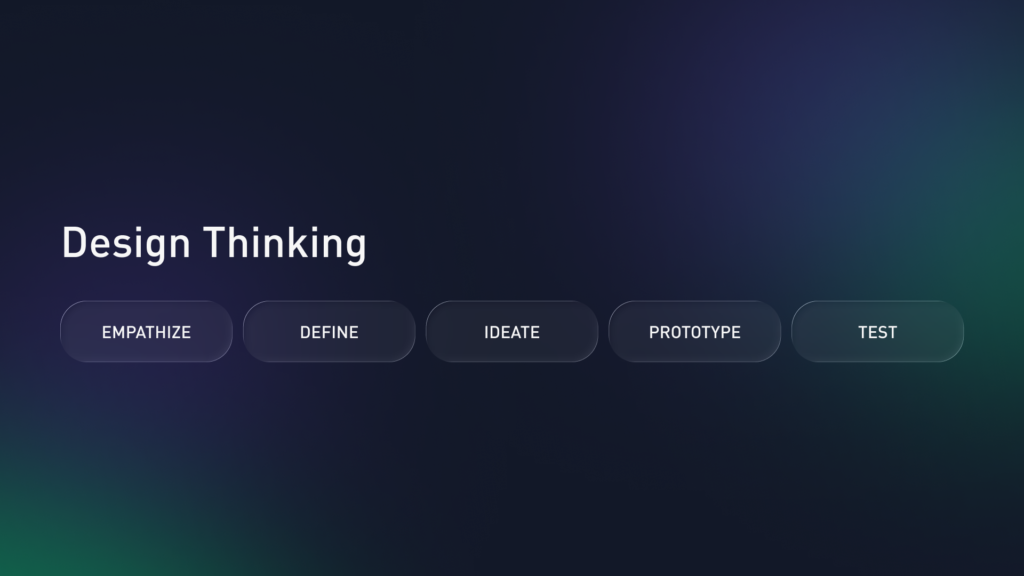
Design Thinking is a user-centered methodology for solving complex problems. It consists of five stages: Empathize, Define, Ideate, Prototype, and Test. Although each stage provides information for the next, it’s not a linear process. You can iterate between stages and return to them as many times as necessary, testing different solutions until you find the one that truly works. Therefore, it’s a flexible methodology without a specific timeframe.
What is a Design Sprint? Speed and validation in 5 days
The Design Sprint, popularized by Google Ventures, is a high-intensity, five-day process designed to answer critical business questions through design, prototyping, and validation of innovation.
It’s an essential tool for digital product development, as it allows for risk reduction before the development phase.
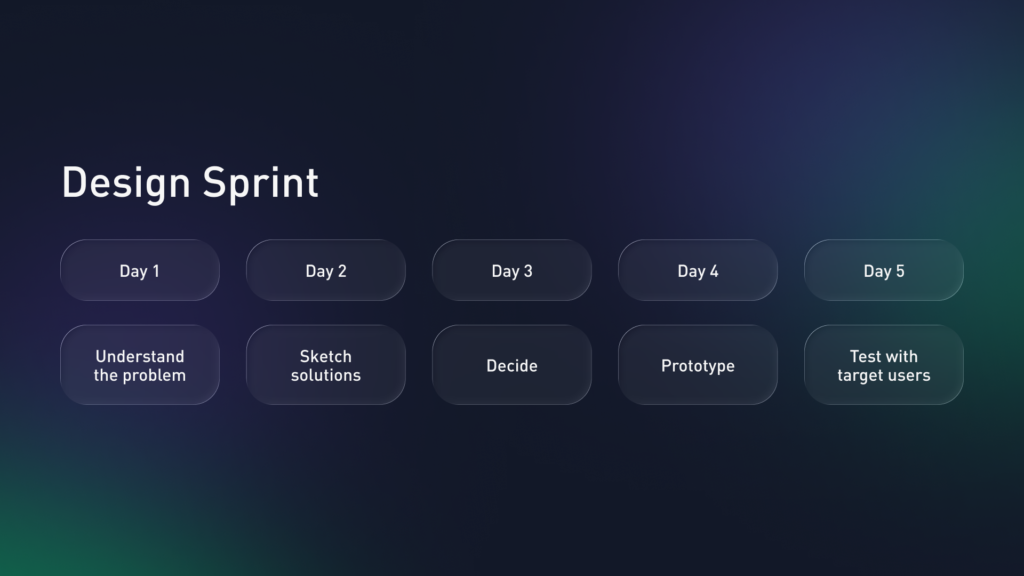
The timeline of a Sprint:
- Monday (Understand): The problem is mapped and the objective is chosen.
- Tuesday (Ideate): Each team member sketches solutions.
- Wednesday (Decide): The best ideas are selected.
- Thursday (Prototype): A prototype that “looks real” is built.
- Friday (Validate): The prototype is tested with real users.
How do I know which one to use?
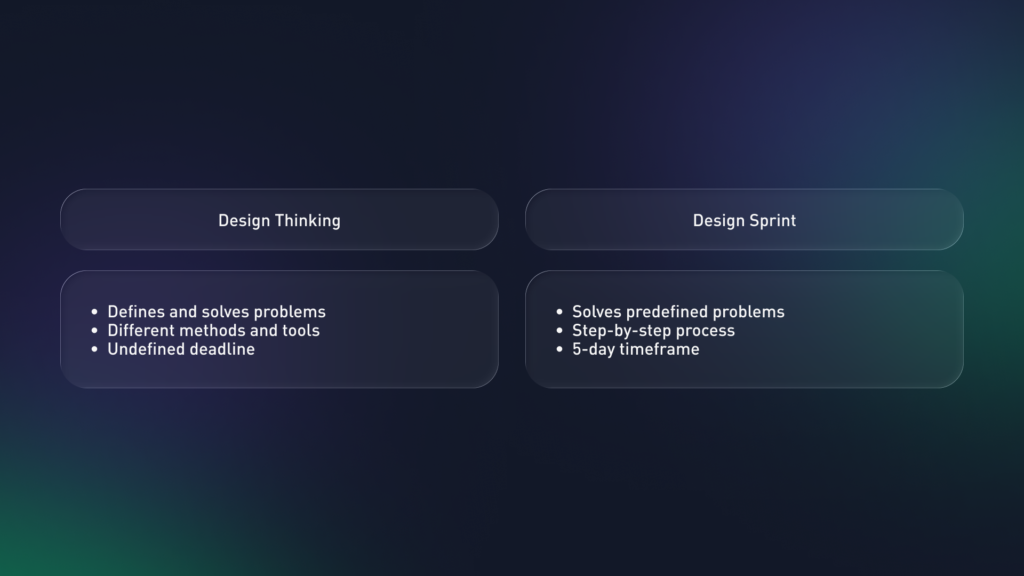
If you’re facing a complex problem that isn’t entirely clear, you have time to explore and iterate, and the problem affects several people in different ways, Design Thinking is recommended, as it allows you to delve deeper into the problem without time pressure.
On the other hand, a Design Sprint is more suitable when you have a specific hypothesis to validate or a concrete problem to solve, you need quick results to make urgent decisions, and you want to avoid investing months in something that might not work.
Imagine you want to get in shape. Design Thinking would be like adopting a healthy lifestyle; you change your mindset, explore different exercises, listen to your body, and constantly make adjustments. Design Sprint, on the other hand, would be like an intensive 5-day bootcamp to prepare you for a specific race. Both help you achieve goals, but in very different ways; this is how these two methodologies work in the world of design and innovation.
Boost your innovation with Blaster
At Blaster, we apply user-centered methodologies to create solutions that not only look good, but also deliver real value to your business and your customers.
Do you have a complex problem or an idea you want to validate? Contact us today for a personalized consultation and let’s define together which methodology will take your project to the next level.

